
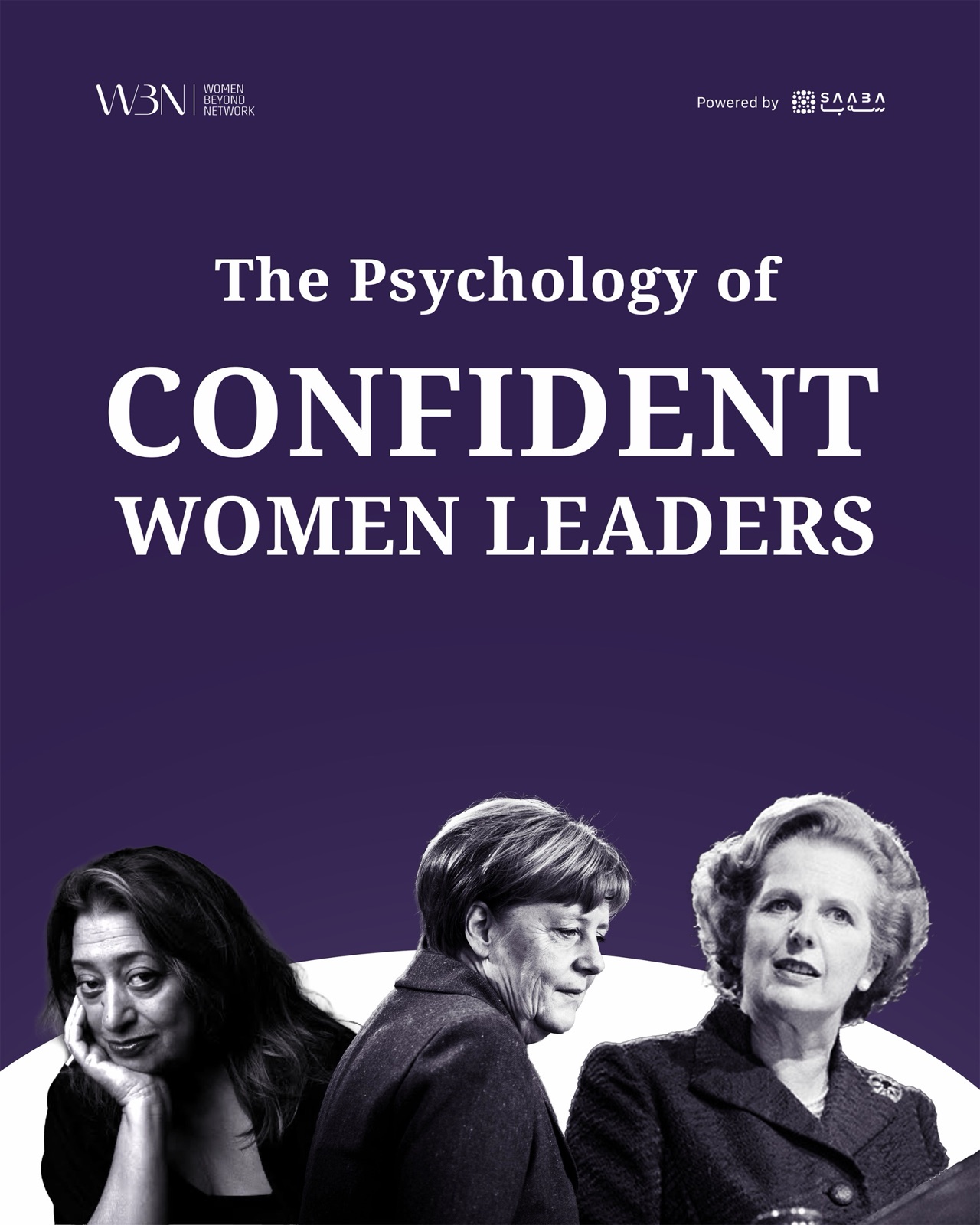
Confidence is not a gift. It is a construction, built plank by plank through learning, experience, and above all, action.
There is a persistent myth about confidence: that it is a fixed trait, distributed unevenly at birth, and that some women simply have it while others must learn to live without it. The research tells a very different story.
This distinction matters enormously for women in leadership. If confidence were innate, self-doubt would be a verdict. Because it is built, self-doubt is merely a starting point. The women who lead with the greatest assurance are rarely those who never questioned themselves. They are the ones who took the opportunity anyway, learned from the challenge anyway, and kept moving while the doubt was still talking.
Some of the most rigorous thinking on this subject comes from a handful of books worth keeping close:
- Carol Dweck’s Mindset
- Katty Kay and Claire Shipman’s The Confidence Code
- Angela Duckworth’s Grit
- Daniel Goleman’s Emotional Intelligence
- Adam Grant’s Think Again
Read together, they sketch a psychology of confidence that is far more interesting, and far more attainable, than the myth.
What the research actually shows
Begin with learning. Confident women leaders have made peace with a truth that insecure leadership resists: they do not need to know everything. They ask questions in rooms where others perform certainty. They seek feedback rather than protection from it. Dweck’s work on the growth mindset explains why this works. When we believe our abilities can expand through effort, a challenge stops being a test of our worth and becomes an invitation to improve. The shift is subtle but transformative. Confidence grows when learning becomes more important than perfection.
Then there is the question of readiness, which may be the most consequential insight of all. Most of us assume confidence precedes action: first you feel ready, then you act. Kay and Shipman’s research in The Confidence Code found the sequence runs the other way.
Confidence is a consequence of action, not a prerequisite for it.
The woman who accepts the role before she feels fully qualified, who speaks in the meeting despite the racing pulse, who starts the business with an imperfect plan, is not being reckless. She is doing the only thing that has ever actually produced confidence. Waiting to feel completely ready is, in practice, a strategy for missing your moment.
Setbacks complicate the picture, but they do not break it. Every leadership journey includes failure, and what separates confident leaders is not that they avoid mistakes but how they interpret them. A setback can be read as evidence of inadequacy or as information. Duckworth’s research on grit suggests that this interpretive choice, made over and over across years, matters more than raw talent. Persistence and resilience compound. The leader who reflects, adjusts, and tries again is running a fundamentally different race than the one who treats each stumble as a referendum on her capability. Failure becomes a lesson rather than a limitation.
None of this works without emotional literacy. Leadership is not a purely technical exercise, and the pressure it involves cannot simply be suppressed. Goleman’s work on emotional intelligence shows that self-awareness and emotional regulation allow leaders to respond thoughtfully rather than react from stress or fear. This is worth stating carefully, because it is often misunderstood: emotional strength does not mean hiding fear or uncertainty. It means knowing those emotions well enough that they inform your decisions without controlling them. The confident leader is not the one who feels nothing. She is the one who feels it, names it, and chooses her response anyway.
Finally, and perhaps counterintuitively, confident leaders hold their own ideas loosely. Grant’s Think Again makes the case that the willingness to question our assumptions and change our minds is a mark of intellectual strength, not weakness. Insecurity clings to being right. Confidence can afford curiosity. It can listen to a dissenting view, sit with the discomfort of being challenged, and update.
Being confident does not mean always having the right answer. It means being secure enough to keep looking for a better one.
The long game
Put these threads together and a pattern emerges. Confidence is not a single quality but a practice, developed gradually through experience, challenge, mistakes, relationships, and opportunities taken. It cannot be rushed, but it can absolutely be built, and it builds fastest in the right environment.
This is where community becomes more than a nice idea. Women who have spaces to share ideas, learn from others who are a few steps ahead, and take on new responsibilities with support behind them travel this road faster and further. Confidence may be personal, but it is rarely built alone.
So if you are waiting for the feeling to arrive before you begin, consider that you may have the order reversed. You do not have to feel confident to start.
Sometimes confidence is simply what courage looks like after enough repetitions. The beginning comes first.